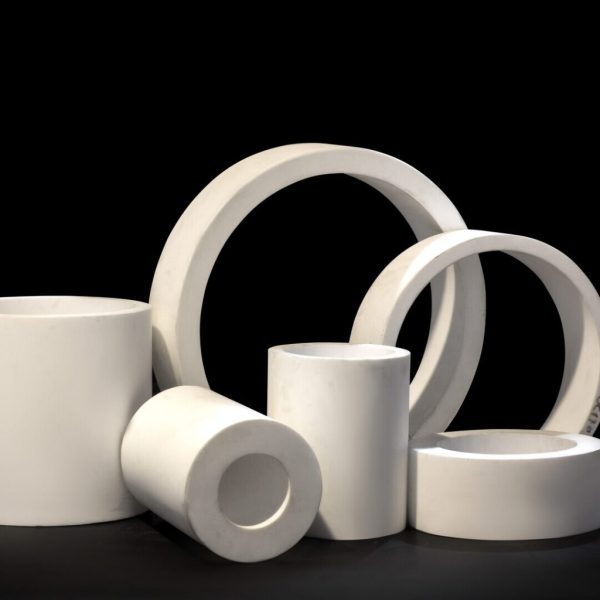
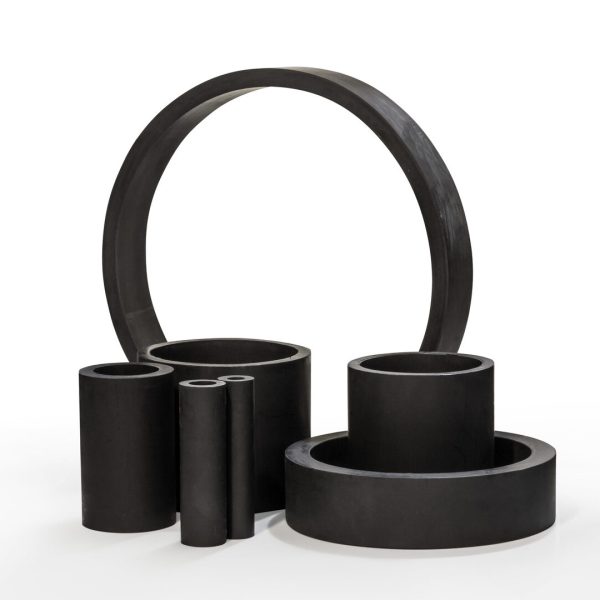
PTFE+35%Carbon
In Teflon PTFE 35% carbon (PTFE 35% carbon or PTFE + 35% Carbon), 35% carbon and a small percentage of graphite are added to virgin Teflon (PTFE).
Carbon significantly improves the erosion and metamorphic strength of the material and its chemical resistance remains relatively unchanged. However, the electrical properties of the material also increase significantly.
Also, with increasing carbon, the amount of tensile strength and elongation increases.
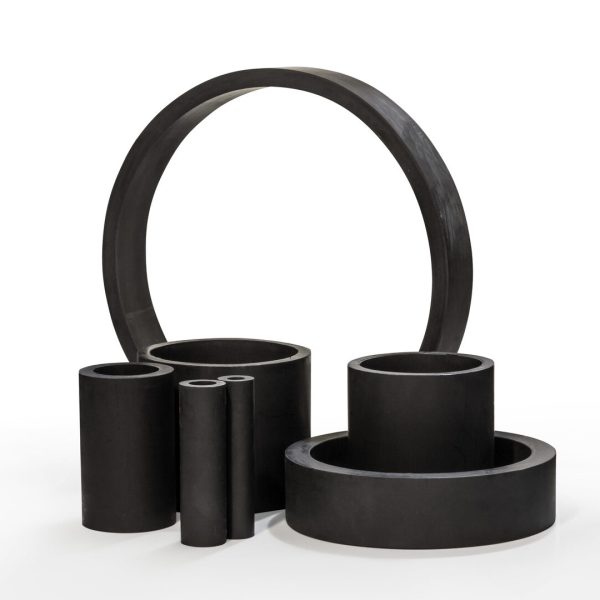
PTFE+25%Carbon
Teflon PTFE mixed with 25% carbon (PTFE carbon or PTFE + 25% Carbon) is one of the fluorinated Teflon with 23% carbon and 2% graphite added to Virgin Teflon (PTFE) and has Relatively better features compared to Virgin Teflon (PTFE) and naturally available in black on the market.
Carbon significantly improves the erosion and metamorphic strength of the material and its chemical resistance remains relatively unchanged. However, the electrical properties of the material also increase significantly.
Teflon carbon (PTFE + Carbon) is primarily used in cases where more thermal and electrical conductivity is required than Virgin Teflon PTFE.
It is also modified in durability and compressive strength to Virgin Teflon (PTFE), which makes it suitable for pressurized applications. Teflon carbon (PTFE + Carbon) has good resistance to creep, pressure tolerance, surface coating and abrasion in sliding or scratching applications in dry to lubricated conditions.
Teflon carbon (PTFE + Carbon) is the best type of reinforced Teflon for aquatic environments. It is also very suitable for dynamic applications at high speeds, because thermal conductivity reduces the accumulation of heat on the surface involved and therefore has a better lifespan than other Teflon in these conditions.
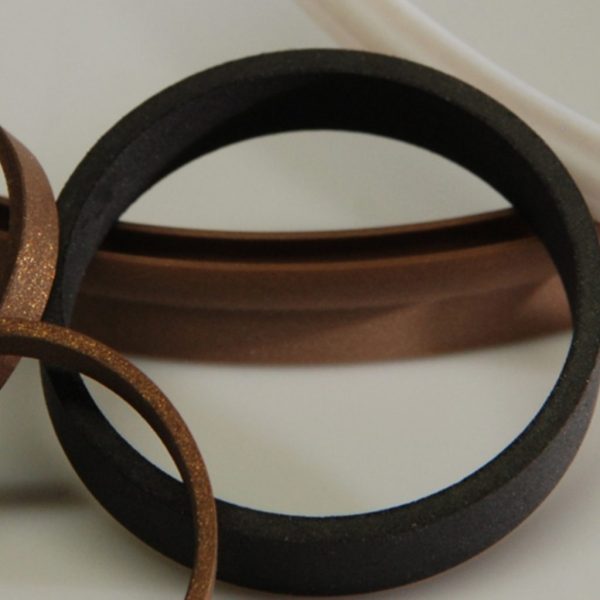
PTFE Compound
The development of technologies has helped to improve the properties of Virgin Teflon (PTFE) for various applications. Adding an appropriate amount of organic and inorganic fillers can improve some of the mechanical, chemical, thermal and electrical properties.
Up to 60% fillers can be added to quality Teflon (PTFE). The most common fillers are glass fibers, carbon, bronze, graphite and molybdenum disulfide.
Teflon (PTFE) does not easily enter the compound due to the neutrality of its chains. In fact, each filler must withstand temperatures above 400 ° C for several hours. This removes a lot of material alone.
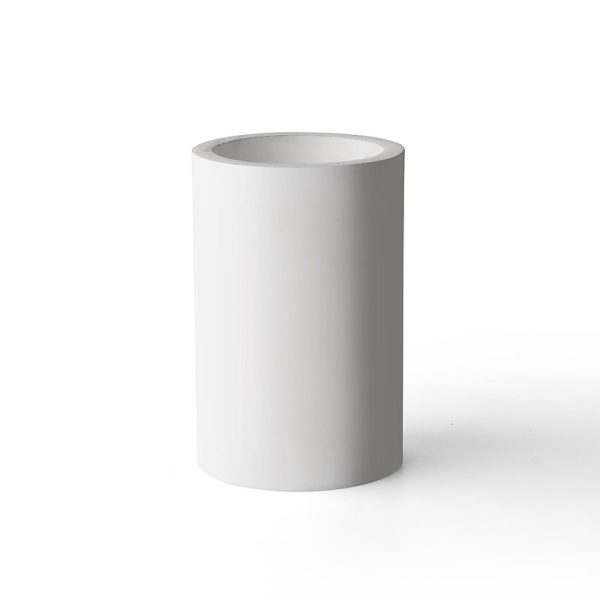
Virgin PTFE
The basic properties of Teflon (polytetrafluoroethylene, PTFE) are due to the chemical structure of the polymer, which consists of a double bond of carbon and fluorine.
The size of the fluorine atom allows a uniform, continuous sheath to form around the carbon-carbon bonds to protect them from external attack. As a result, it causes the molecule to have chemical resistance and stability.
Teflon PTFE, on the other hand, retains its properties at very low temperatures. Therefore, it has many applications in important industries such as aerospace and industries that need to work at low temperatures, such as sealing liquid nitrogen tanks at -196 degrees and liquid hydrogen -253.